
County News
Fall bird banding at PEPtBO
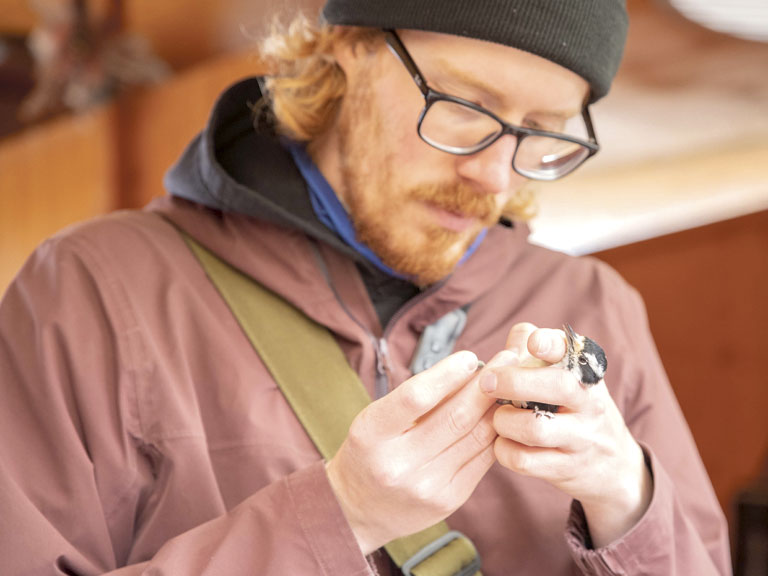
Monitoring songbirds as they fly through the County
The fall bird banding program at the Prince Edward Point Bird Observatory (PEPtBO) monitors the return of songbirds from their northern breeding areas as they make their way south to warmer climes such as the southern United States, Central America or even South America. PEPtBO collects data on returning birds through its banding program, where birds are captured in mist nets, as well as through visual and auditory monitoring— where staff and volunteers identify birds via sight and sound—to provide long-term information of the health of bird species. “This program tells us a lot about population trends over time , about birds’ migratory pathways and even about their longevity as a species,” said PEPtBO station manager Ashley Jensen. While in some ways the fall bird migration is a mirror image of the spring migration, there are some key differences. The spring migration sees a huge influx of birds flying south over a short period of time. In particular, the warblers come through almost all at once and are in their colourful breeding plumage, leading to a lot of excitement among birdwatchers who also flock to this area during those few weeks in May. The fall migration southwards is more protracted—and the birds are for the most part less colourful. “The fall migration is spread out over time. The birds aren’t in a big rush like they are in the spring, and you really see the species composition change over time. We had the warblers as early as mid-August and into early October, and now we’re getting kinglets, sparrows and blue jays,” said Ms. Jensen. The banding program only monitors smaller birds, but other species are not forgotten. There’s a waterfowl count every year, and a saw-whet owl program in the fall. Other organizations, such as the Ministry of Natural Resources, also have monitoring programs for colony-nesting birds such as herons and egrets.
The warmer fall weather has delayed the migration of some species, especially the ones that are shorter-distance migrants. The warblers, who are long-distance migrants, were not affected as much, as they generally leave well before the cold weather sets in. But other species have delayed their trip south. “Normally in early October we’d see a really big push south, and we didn’t get that at all this year, which is in contrast to the last few years,” said Ms. Jensen. The majority of the birds, about 85 per cent, captured in the fall are this year’s hatchlings. Unfortunately, many do not survive through the winter to make the return trip the following spring. The long-term monitoring program at PEPtBO does provide an indication of survivorship, but only in a general sense as there are a lot of variables to consider. A more detailed picture can be obtained by the local MAPS program (Monitoring Avian Productivity and Survivorship). Local monitoring over the summer at five sites across the County provides data on how well bird species that nest here are doing in their habitat through the breeding season. “Determining the survivorship gives an idea of the quality of the habitat, as does the number of returning recaptures we get at a site,” said Ms. Jensen. It takes about 10 years to collect enough data to reliably track population trends, and the MAPS program has only been in place for five years at most of the County sites. Ms. Jensen said that a year-end report will be issued to re-evaluate the program. For more information about PEPtBO, please visit peptbo.ca
Comments (0)