
County News
What did and did not happen
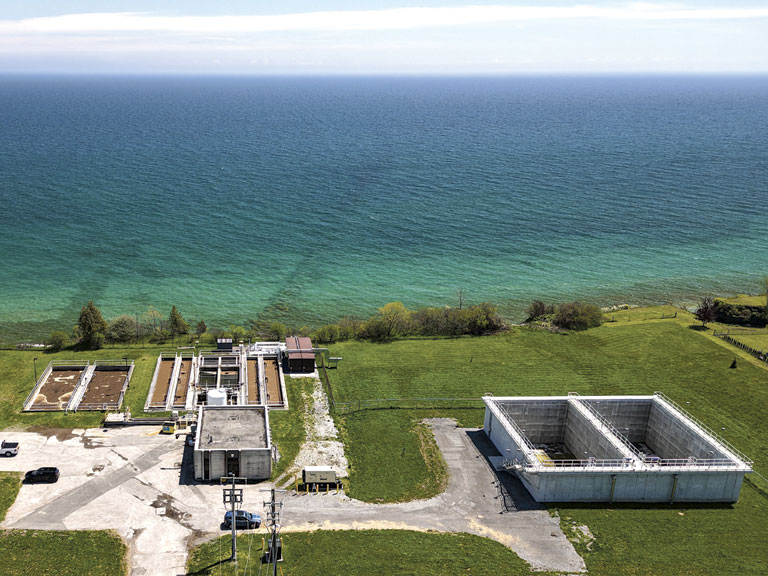
Council agrees to plan waterworks expansion based on one per cent growth rate
It is critical in the summer of 2026 to know what a committee of council did last week, and what it didn’t do. Before them on Thursday afternoon was a request to approve a one per cent annual population growth rate as guiding framework for waterworks planning. Along with it was a list of things that must be done to understand how this target might be met and how it would be paid for.
But the report went further. Staff were asking Council to endorse a Regional Water Plan (mega plant and new intake in Wellington and a 20-kilometre pipeline to Picton). This proved a step too far.
Waterworks decisions will be measured in hundreds of millions of dollars. They have implications that will impact generations. Council agreed to continue to plan, to investigate and to understand who will pay and how much before it goes any further.
WHAT COUNCIL DID
- The committee of council agreed to the one per cent population growth rate as a planning target.
- It directed staff to talk to developers to assess their interest in pre-paying development charges.
- It further directed staff to scour the land in search of government grants and funding.
- Staff will prepare a financial plan that shows how infrastructure will be paid, and when. It will show the rate impact to existing users and to new homebuilders in the form of development charges.
- Shire Hall staff will proceed with the design of the regional water plant design and the regulatory paperwork.
WHAT IT DIDN’T DO
Council did not endorse a regional water study. It did not confirm or approve any particular plan or timeline according to the County’s Chief Administrative Officer, Adam Goheen.
Councillor Corey Engelsdorfer asked why Council was being asked to endorse a plan before some basic questions were answered—such as who is going to pay.
“I want to clarify,” interjected CAO Goheen. It was his first comment in the three-hour meeting on Thursday. “Adopting the one per cent is an input to the project planning exercise.
“I want to be clear that if Council should choose accept or adopt that recommendation it does not confirm any particular project plan or timeline therein.
“The financial plan needs to be done,” continued Goheen. “We have our DC (development charge) work that needs to be done, So we are not committing anybody today to a particular plan, plant or spending.”
“We have more work to do, to determine how we are going to pay for all of this,” added Goheen.
It was enough to satisfy most council members. There remain a handful who steadfastly believe developer’s claims that 11,000 new homes are imminent in Prince Edward County.
“Growth is happening,” said Councillor John Hirsch without evidence. “That is a given.”
Councillor Sam Grosso said developers are “chomping on the bit.”
Others worry the scale of spending proposed against a dubious track record in Wellington puts too much risk on the backs of existing ratepayers and, ultimately, taxpayers. They also point to the fact that Kaitlin has owned fields north of Wellington for 20 years—with nary a house in sight.
Thursday’s compromise (continue studying, don’t build anything) allowed both sides (plus staff) to go home thinking they had secured a victory.
Until the numbers are produced and funding commitments are secured, either from developers and senior levels of government, it remains an exercise of moving paper.
For a council nearing the end of its term, its authority to bind the municipality to unprecedented spending and debt is diminishing.
The claims by the quoted Councillors that “Growth is happening,” and ‘developers are “chomping on the bit.”’ are not supported by facts.
Development is definitely happening in Belleville, Brighton, Napanee and areas along the 401 corridor. Because that’s where people a) need to be for work related commutes, and b) can afford to be, because costs are lower.
But with the impending 2.5 year disruption to Highway 49, the supply chains and worker commutes to support County developments are pushing cost estimates higher and higher, making the business cases for such developments less and less feasible.
When you factor in what will surely be flat or limited population growth once the 2026 Census figures are released in 2027, these forecasted builds will shrink at best, and at worst, disappear like those that were planned for the GTA Greenbelt once that debacle was exposed.
With only 3 months to Election Day, this Council cannot be allowed to bind the municipality to any spending or debt that is not already committed.
And I wonder where the developers from that GTA Greenbelt debacle ended up?